
T-Stud: Building the Machines that Built the Product
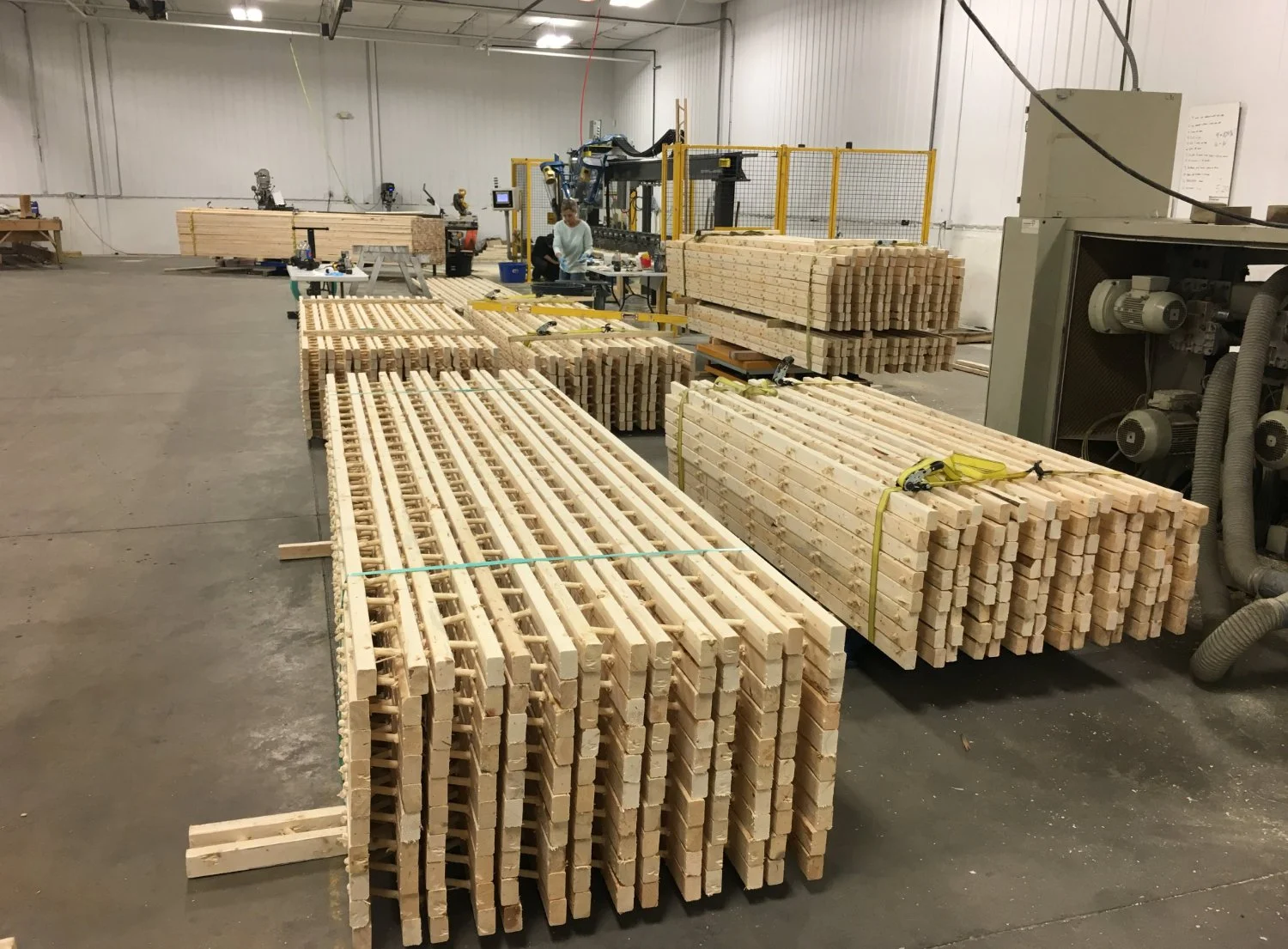
T-Stud insulated 2x6 replacement wall stud in process.
Working alongside the product’s inventor, we brought the novel concept to life and to scale.
The product had a patent. It didn't have a process. We built the manufacturing system, the production machine, and every auxiliary component from scratch — and it's still running.
The Client: T-Stud - Envirobon Inc. Minnesota, USA
The Brief
An inventor had developed T-Stud — an insulated wall stud engineered to replace the traditional 2×6 and other framing members, with dramatically better thermal performance. The concept was solid, patented, with a market hungry to adapt it. The manufacturing process and machinery, testing protocol, and facility did not exist. The brief: make this buildable, at scale, with verifiable quality. From scratch.
What Made it Hard
The T-Stud's defining structural feature was also its manufacturing challenge: every fastening hole is constructed at opposing compound angles — changing in two axes simultaneously across the entire length of the stud. No standard tooling solves this. The machine would have to be designed from first principles. None of the downstream components existed either. Not the dowels. Not the foam filling system. Not the testing equipment. Every system depended on decisions that hadn't been made yet, being made simultaneously, with no precedent to follow.
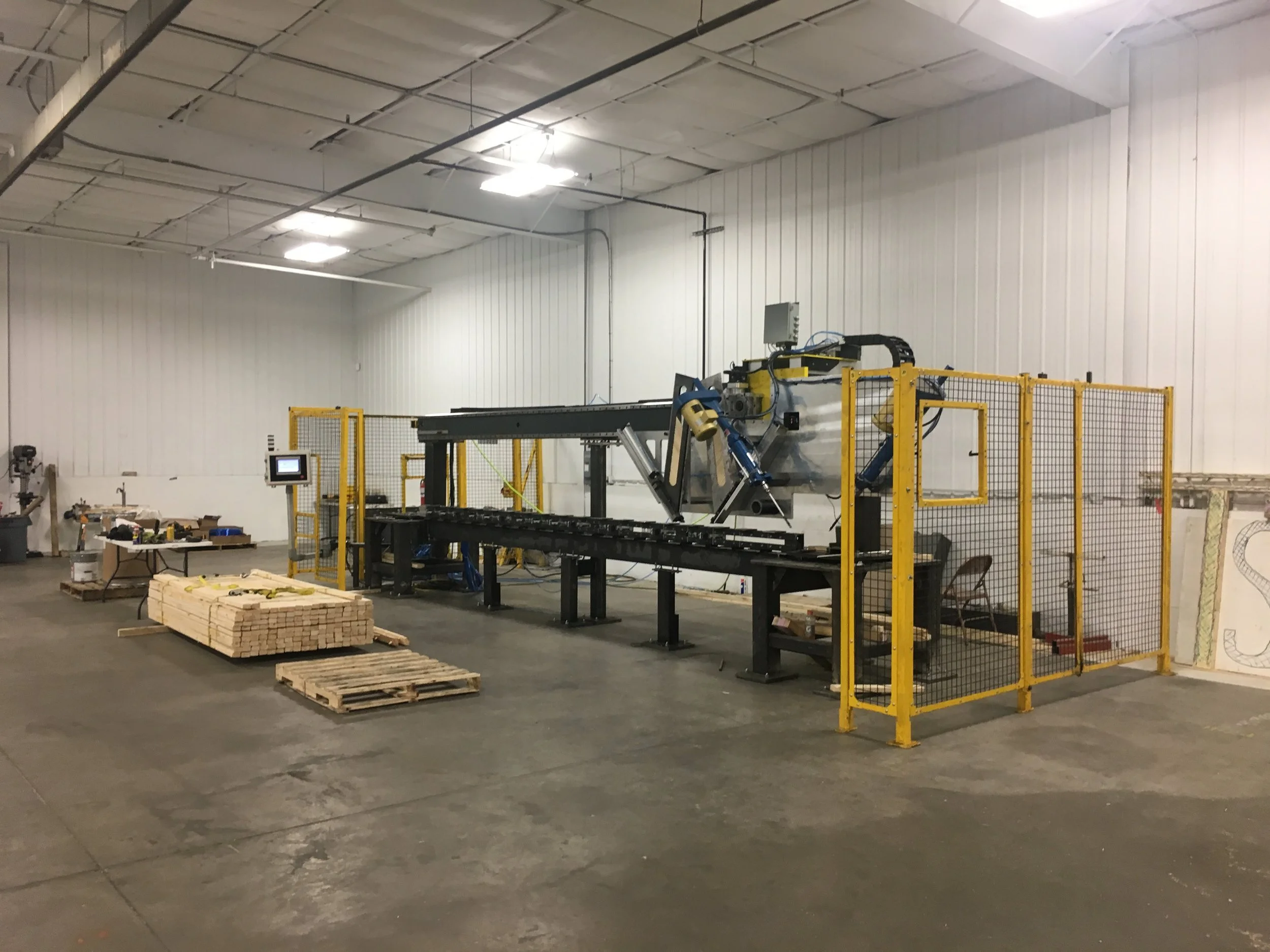
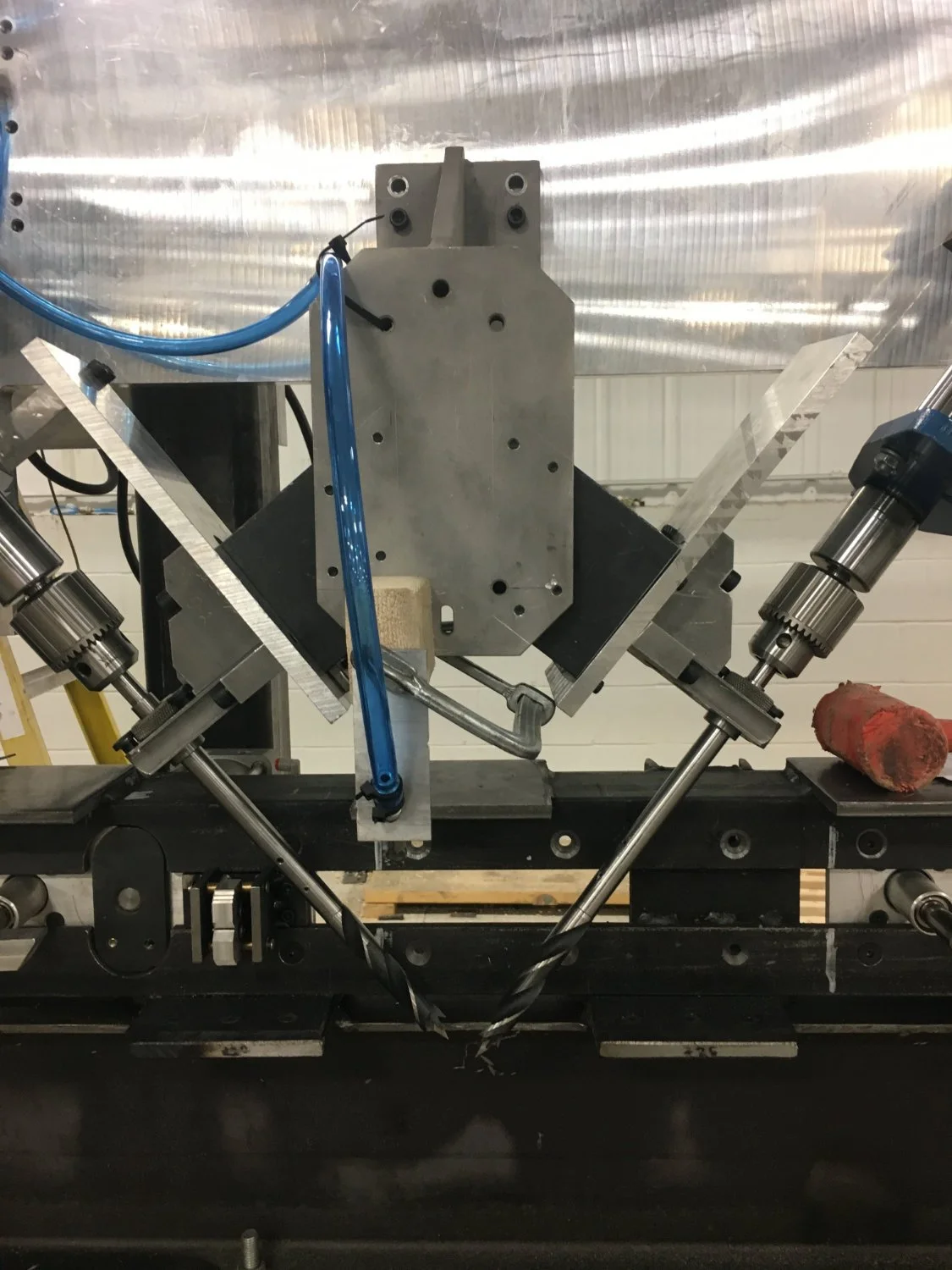
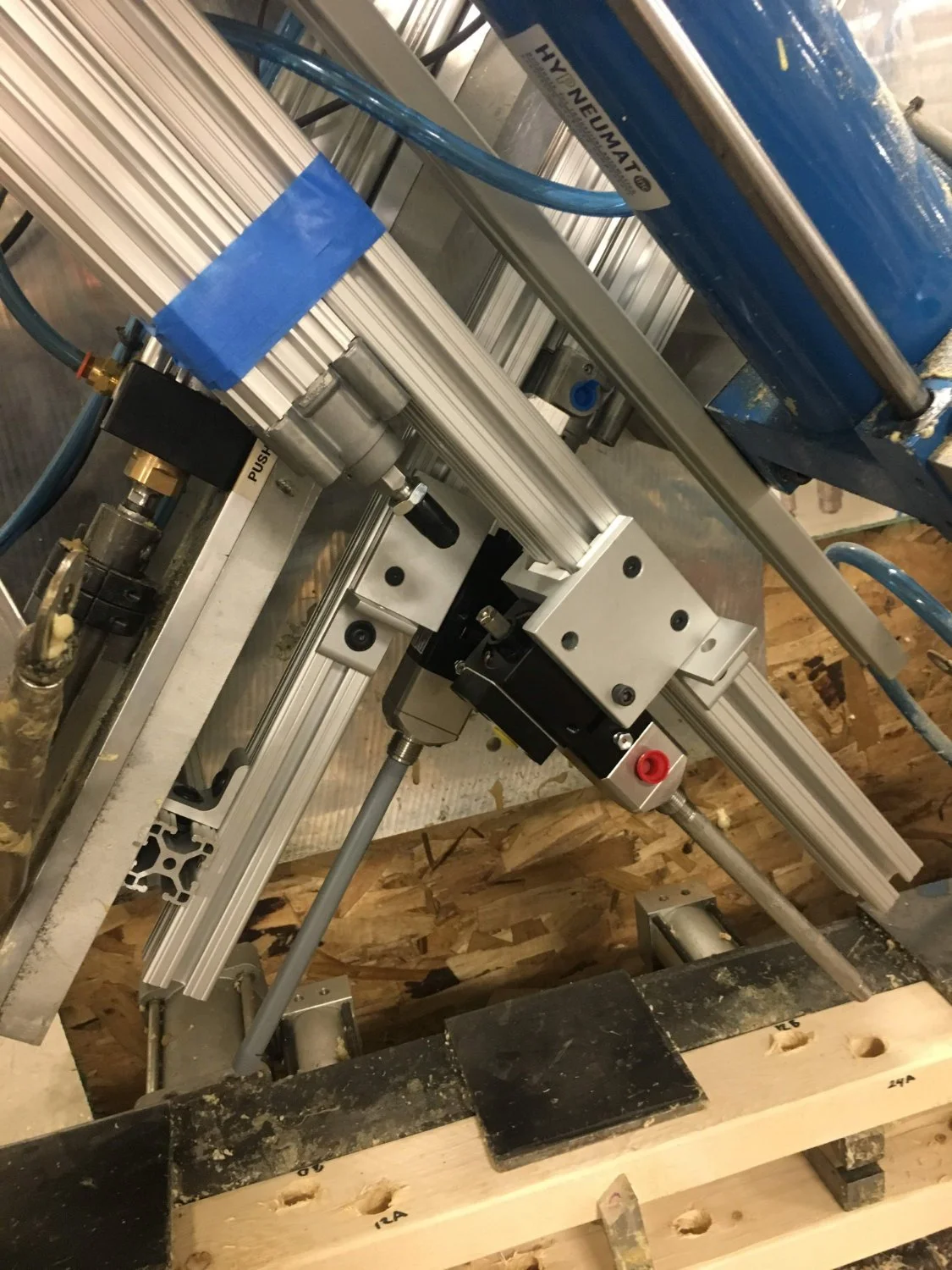
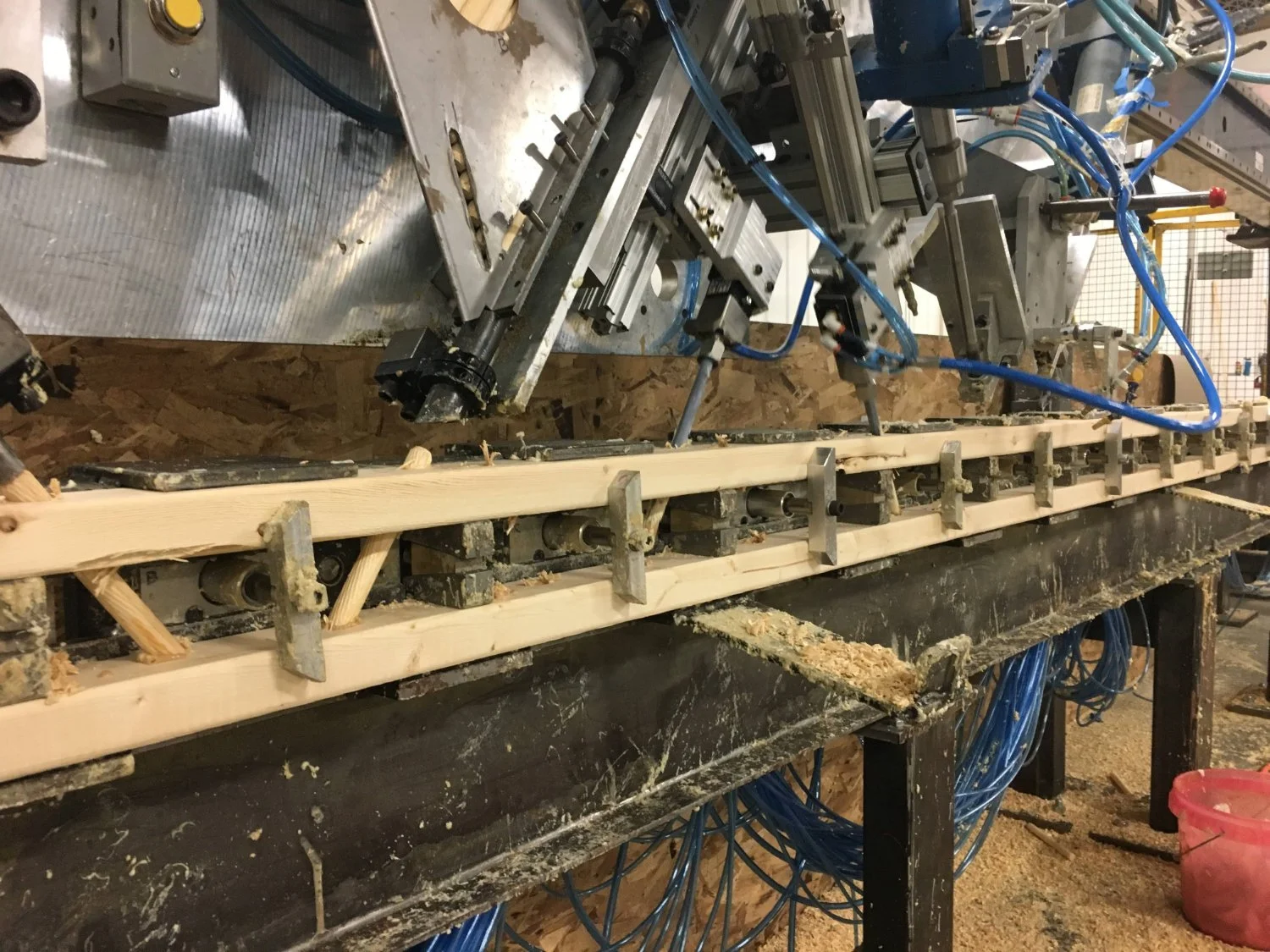
1 — The Gantry Machine
The primary production machine was a custom drill/glue/dowel-insertion gantry assembly we designed, engineered, built, and programmed end to end with a very small team.
The sequence: drill the compound-angle holes, inject adhesive through custom-designed glue nozzles, then drive 5/8" wood dowels using high-powered pneumatic rams — one every six inches across the length of each stud. The gantry indexes forward and repeats. Stock clamping went through multiple iterations before landing on a pneumatic system rigid enough for compound-angle drilling without position error between stations. The sequencing logic, indexing, and pneumatic actuation timing I designed and built myself. The machine has since been updated and modified to adapt a second product line and remains in production today.
2 — The Foam Filling System
The T-Stud's thermal performance comes from polyisocyanate foam filling the hollow wood frame cavity. We designed and built simple hydraulic press frame for the common lengths of T-Studs for proof-of-concept. A heated press-and-plate system holds a rack of frames in geometry during injection and cure, then developed the fill process through methodical testing — isolating foam chemistry, injection cycles, time, pressure, temperature, and geometry variables one at a time to achieve consistent fill, density, and R-value across every unit. More patience than drama, and just as critical as the gantry.